Complex reconstruction and TMJ treatment
When a mouth has broken down — through accident, decay, failed restorations or years of wear — it can be rebuilt. And when the jaw joint is the problem, it can be diagnosed and treated.
Complex reconstruction
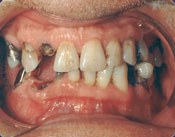
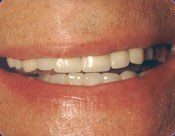
Complex reconstruction is just that: rebuilding a broken-down mouth to its original condition, or better. It may follow an accident, or simply the general breakdown of the whole mouth over time.
As teeth age, many patients have had extractions because of abscesses, fractures and decay. Older fillings discolour and become unsightly. Staining, darkening and misalignment are often the symptoms behind the familiar complaint: “I just don't like my teeth.”
Teeth can be returned to their original condition — or better — using fixed bridges (which you cannot take out), implant prosthetics, veneers, tooth-coloured inlays and crowns. After a full-mouth reconstruction the mouth can be as perfect in appearance and function as you would like it to be.
Combined with current techniques and regular check-ups afterwards, your smile can be better than ever. The planning matters as much as the materials: the bite has to be rebuilt so that the new restorations are not fighting each other.
TMJ (TMD) treatment
Temporomandibular joint symptoms radiate from the jaw joint. They are often caused by misalignment of the teeth or a poor bite relationship — and they are frequently misdiagnosed as headaches, sinus trouble or stress.
Symptoms include
- Headaches, especially when waking
- Awareness of night-time grinding
- Sore jaw muscles
- Neck and shoulder pain
- Tired jaws after eating tough food or after laughing
- Inability to open wide
- Clicking or popping
- A jaw that locks at times
- Pain behind the eyes
- Taking painkillers to get through the day
- Low mood or depression linked to constant discomfort
- Discomfort that interferes with daily life
Why it happens
These symptoms are often related to a jaw injured during sport or an accident. At other times there seems to be no obvious reason at all.
Missing teeth left unreplaced for a long period lead to a poor bite and put additional strain on the jaw joint and muscles. Misaligned teeth, deep bites or teeth slanting backwards may also be culprits.
How it is treated
Treatment usually begins by settling the pain: a bite splint (almost invisible), bite adjustment, and sometimes orthodontics. Where teeth are missing, replacing them is important to maintain a healthy jaw.
Can all patients be corrected? The honest answer is no — but most patients see a major difference, and a change in their lives free from significant TMJ discomfort.
What a reconstruction consultation involves
You may call for a complimentary cursory examination and ask questions about your case. If you decide to continue, a complete examination is scheduled, followed by a consultation. For TMJ cases, a panoramic X-ray is usually needed — if you do not have a recent one there is a fee for the film.
At the consultation you will hear everything that ideally needs doing, roughly what it will cost, and the payment methods available. Then you decide what treatment is appropriate for you.
Not sure where to start?
Call the office or send a request. A complimentary cursory consultation is enough to find out what, if anything, needs doing.