Single tooth replacement
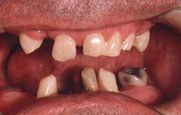
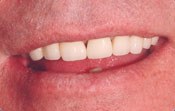
A broken-down front tooth removed and replaced with an implant-supported crown.
A replacement root for a missing tooth — and increasingly the best answer for a mouth that has lost several.
An implant is a small titanium root placed in the jaw where a tooth has been lost. Titanium is used because bone accepts it: over a few months the surrounding bone grows against the surface and holds it firm, a process called osseointegration.
Once the implant is stable, it can carry a single crown, support a fixed bridge across several missing teeth, or anchor a denture that no longer stays put. Because it is fixed in bone, it does not rely on the teeth on either side — which is the main reason it is often preferred to a conventional bridge.
Most adults with adequate bone and healthy gums can be considered. The things that are assessed before anything is promised:
A broken-down front tooth removed and replaced with an implant-supported crown.
Examination, X-rays and — where useful — a cross-sectional scan to measure bone. We confirm the position the crown will need, then plan the fixture around it.
The fixture is placed surgically under local anaesthetic, by the surgeon who places it; the crown or bridge that sits on it is made and fitted here. Most people find the placement easier than an extraction they have already had.
Bone needs time to grip the implant. The length of that healing period varies with the site and your health, and your surgeon and Dr. Steele will agree the timeline with you.
An abutment and then a crown, bridge or attachment is made and fitted. From here it behaves like a tooth: brush it, clean between it, and have it checked at your recall visits.
Often, yes: it does not require cutting down the neighbouring teeth, and it replaces the root so the bone around it is maintained. A bridge can still be the better choice where bone is limited, where surgery is unsuitable, or where time and cost matter most. We will lay both out for your case.
The surgery is done with local anaesthetic; afterwards there is usually soreness for a few days, managed with ordinary painkillers. Most people return to normal routines quickly.
Many have lasted decades. Longevity depends on gum health, bite forces, smoking and maintenance — which is why the recall appointment is not optional.
Some plans contribute towards the surgical phase, some towards the crown, and many exclude implants entirely. We will estimate what your carrier is likely to cover before treatment begins, based on our experience with it.
Two implants can support a three-unit bridge; four or more can support a full arch. The right number depends on bone volume and bite, not on a formula.
An implant is a surgical procedure. This page is general information, not a diagnosis — suitability can only be judged after an examination and imaging.
Call the office or send a request. A complimentary cursory consultation is enough to find out what, if anything, needs doing.